
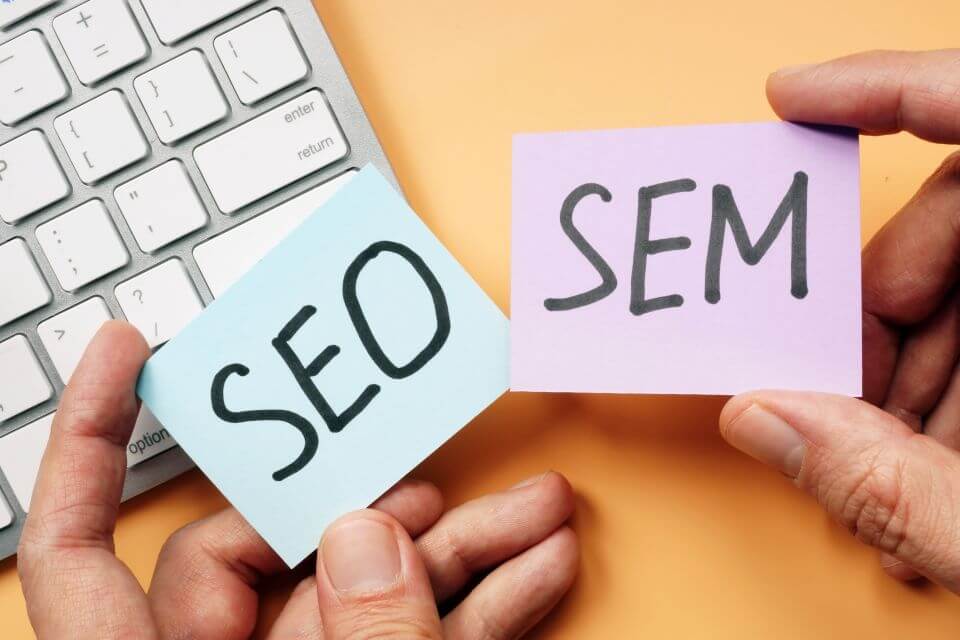
One of the most common questions marketing teams grapple with is whether to spend their precious marketing dollars on SEO or SEM. Is one more effective than the other for attracting customers online? The answer is a little more complicated than just choosing one or the other. A lot depends on your goals, needs, timeline, and resources.
If you look at SEO and SEM as an either-or proposition, you might be selling yourself short. While both strategies aim to increase search engine visibility, they operate in different ways and deliver different benefits. As a result, investing in both often makes for a more successful digital marketing strategy. By using both SEO and SEM, a company can maximize visibility, generate more leads, and achieve stronger long-term results.
How do they work together? Let’s take a closer look at each.
What Is SEO?
Search engine optimization is the process of improving your website’s visibility in organic search results. The goal is to rank higher in search engines naturally without paying for clicks.
Several elements work together to improve SEO:
- Optimizing content
- Improving website performance
- Building authority through backlinks
- Creating a positive user experience
What Is SEM?
Search engine marketing refers to a wide variety of strategies, including SEO, that help you rank well in searches. Generally, SEM is paid advertising and includes strategies like:
- Keyword research and targeting
- Pay-per-clicks
- Display advertising
- Retargeting
- Social media ads
Through platforms like Google Ads, businesses can bid on keywords and place ads at the top of search results. SEM allows companies to gain immediate visibility and drive targeted traffic to their websites.
The Long-Term Value of SEO
SEO is often considered the foundation of a strong digital presence. It does require some investment of time and consistent effort, but the benefits can be substantial and long-lasting.
Builds Organic Visibility and Sustainable Traffic
With strong SEO, you increase organic website traffic and visibility by ranking high for relevant keywords, and unlike paid ads, organic visibility keeps building on itself. Every time you add or update content, you increase your credibility and strengthen your position in search results.
Strong rankings can continue generating traffic long after content is published. This sustainable traffic means steady, long-term growth. You also won’t have to pay for every click, which means lower long-term customer acquisition cost.
Establishes Credibility and Trust
Appearing prominently in search engine results also establishes credibility and trust with consumers. In fact, 81 percent of people said they are more likely to trust brands appearing on the first page of results. When you provide valuable content that ranks high in searches, you position yourself as an authority in your industry.
Supports the Entire Customer Journey
Well-crafted SEO content can address every stage of the customer’s journey, from awareness and research to comparison and purchase decisions. For example, educational blog posts, FAQs, guides, and other resources provide lasting value to both potential and current customers. As you continue to give users information and tools they can use, you develop an ongoing relationship that leads to customer loyalty.
The Immediate Impact of SEM
So, if SEO is a long-term investment, what does SEM offer? Speed and precision.
Generates Instant Visibility
Sometimes, you don’t have time to wait for rankings to improve organically. Maybe you’re in a highly competitive market or are establishing a new business. Or you’re launching a product or offering a seasonal promotion. Instant visibility is important when time is of the essence. With SEM, your business appears at the top of search results as soon as your ads are approved and activated.
SEM campaigns can target high-intent users searching for specific products, services, or solutions. This level of targeting helps businesses reach people who are actively looking to make a purchase. SEM can begin driving impressions, clicks, and traffic within hours of launching a campaign.
Provides Fast Data and Insights
Paid search campaigns also generate valuable data about keyword performance, audience behavior, and conversion rates. Marketers can use these insights to optimize broader marketing strategies, including SEO efforts.
Offers Flexible Budget Control
The faster nature of SEM campaigns allows businesses to scale them up or down more easily, allocating your budget effectively. You can make changes based on goals, seasonality, or fluctuating market conditions. This flexibility makes SEM particularly useful for promotions, product launches, and time-sensitive campaigns.
Why SEO and SEM Work Better Together
So, should your company focus on SEO or SEM? Rather than viewing them as competing strategies, companies should see them as complementary tools that strengthen one another.
When you include both SEO and SEM, your company can:
- Maximize search visibility: By appearing in both paid and organic search results, businesses increase their overall presence on search engine results pages. Combining both accounts for 80 percent of all trackable website visits (53 percent organic search and 27 percent paid search).
- Capture both short-term and long-term opportunities: SEM’s immediate traffic and SEO’s sustainable growth ensure your company benefits from both quick wins and long-term success.
- Improve keyword strategy: SEM campaigns reveal which keywords generate the most conversions. You can then use this info to further optimize your SEO content.
- Increase lead generation: SEO attracts users through informational content while SEM captures high-intent prospects who are ready to act. Together, they create a stronger lead generation funnel.
- Strengthen overall marketing performance: With SEO and SEM, a company gains a more complete understanding of customer behavior. Sharing insights between organic and paid campaigns leads to improved targeting, messaging, and overall ROI.
Your Company Can Benefit from Both SEO and SEM
Thinking about SEO and SEM as competing strategies misses the bigger picture. It’s not really a question of whether your company should focus on SEO or SEM. Instead, think about how to balance both effectively.
SEO builds long-term, organic visibility, credibility, and sustainable growth. SEM gives you immediate exposure, targeted traffic, and fast results. Together, they form a comprehensive digital marketing strategy that supports short-term objectives and builds long-term success.
Need help finding that balance?